
About the procedure
Smile design is not a single procedure but a planning method. The face and lip line are photographed, and the length, shape and shade of the teeth are designed digitally; the design is then tried in the mouth with temporary material.
The approved design is brought to life with zirconia crowns, veneers, gum contouring and, if needed, implants.
Smile design begins with a combined evaluation of smile photographs and video, an intraoral scan, and a panoramic X-ray; which procedure (veneer, crown, whitening, gum contouring, implant) will be done on which tooth is determined tooth by tooth. The goal is to reach the target form with the least loss of tooth structure; sound teeth are treated with veneers or whitening where possible, and problematic teeth with crowns. If the gum levels are uneven, gum contouring (gingivectomy) is added to the plan and done before crown preparation, so that the impression is taken with healed gums.
- ✓See the result in advance
- ✓Harmony with facial proportions
- ✓All dental work in a single plan
Suitability
Who is it suitable for?
May be suitable
- ✓Those with shade, form, length, and alignment problems on several teeth who want a comprehensive solution.
- ✓Patients who show too much gum when smiling or whose gum levels are uneven.
- ✓Those with a combination of old crowns, fillings, and missing teeth who want to renew their mouth in a single plan.
- ✓Patients whose lower face looks collapsed because of worn and shortened teeth.
- ✓Those who want to try the result in their mouth before deciding.
Should be postponed or is not suitable
- —Patients with untreated gum disease and decay; the aesthetic plan is carried out only in a healthy mouth.
- —Pronounced jaw relationship problems; an orthodontic or jaw surgery evaluation is needed first.
- —Single-tooth problems; a single veneer or crown is sufficient for these.
- —Expectations that do not suit the facial type; if agreement cannot be reached at the mock-up stage, tooth preparation is not started.
The final decision on suitability is made after a physician examination and tests.
Process
How does it proceed, step by step?
- 01
Analysis
Facial and smile photographs, video, and an intraoral scan are taken; the lip line, midline, and tooth proportions are measured.
- 02
Digital design
The target tooth form and length are designed according to facial proportions; the patient's wishes and facial character are incorporated into the design.
- 03
In-mouth mock-up
The design is transferred to the teeth with temporary material; the patient sees it in the mirror and in photographs, and adjustments are made at this stage.
- 04
Gums and shade
If needed, the gum levels are evened out and whitening is done; a few days are allowed for healing.
- 05
Treatment
The teeth are prepared according to the approved design and temporaries are fitted; after the laboratory work, the veneers and crowns are tried in and bonded.
- 06
Check and follow-up
Bite and gums are checked and the result is compared with the initial photographs; after you return home, a remote follow-up and six-month check-up plan is given.
Recovery
Recovery timeline
Day 1
If gum contouring was done, mild soreness and oozing; sensitivity is possible after crown preparation.
Days 3–5
Temporary crown period; soft foods, careful brushing, and avoiding sticky foods are required.
Week 1
The permanent crowns and veneers are fitted; you adjust to speaking and the bite within a few days.
Month 1
The gums adapt to the new margins and sensitivity subsides; shade and form reach their final state.
Month 6
Check-up and cleaning; night guard use and margin fit are evaluated.
Year 1
Annual check-up; the result is compared with the initial photographs.
Timeframes are averages; they vary by person and by the scope of the procedure.
Results
Before / After
Published with patient consent. Results vary from person to person.
 Before
 After
After Before
 After
After Before
 After
After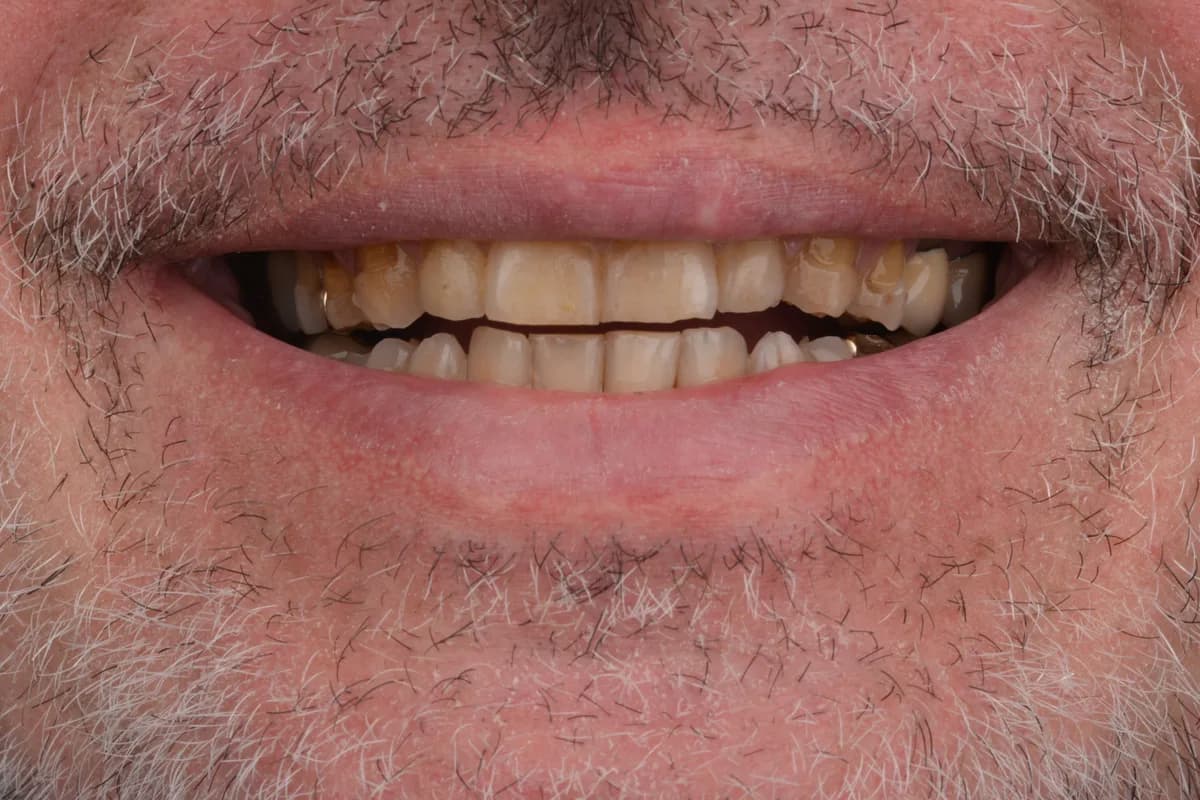 Before
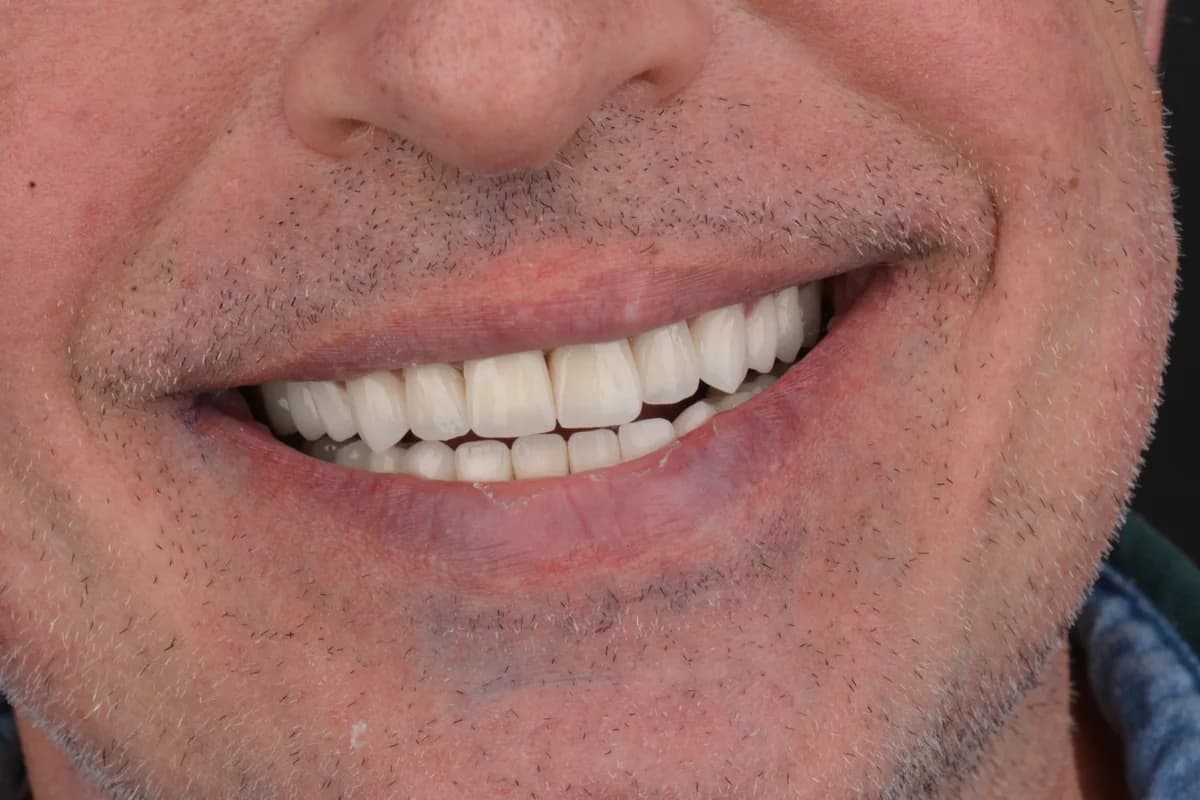 After
After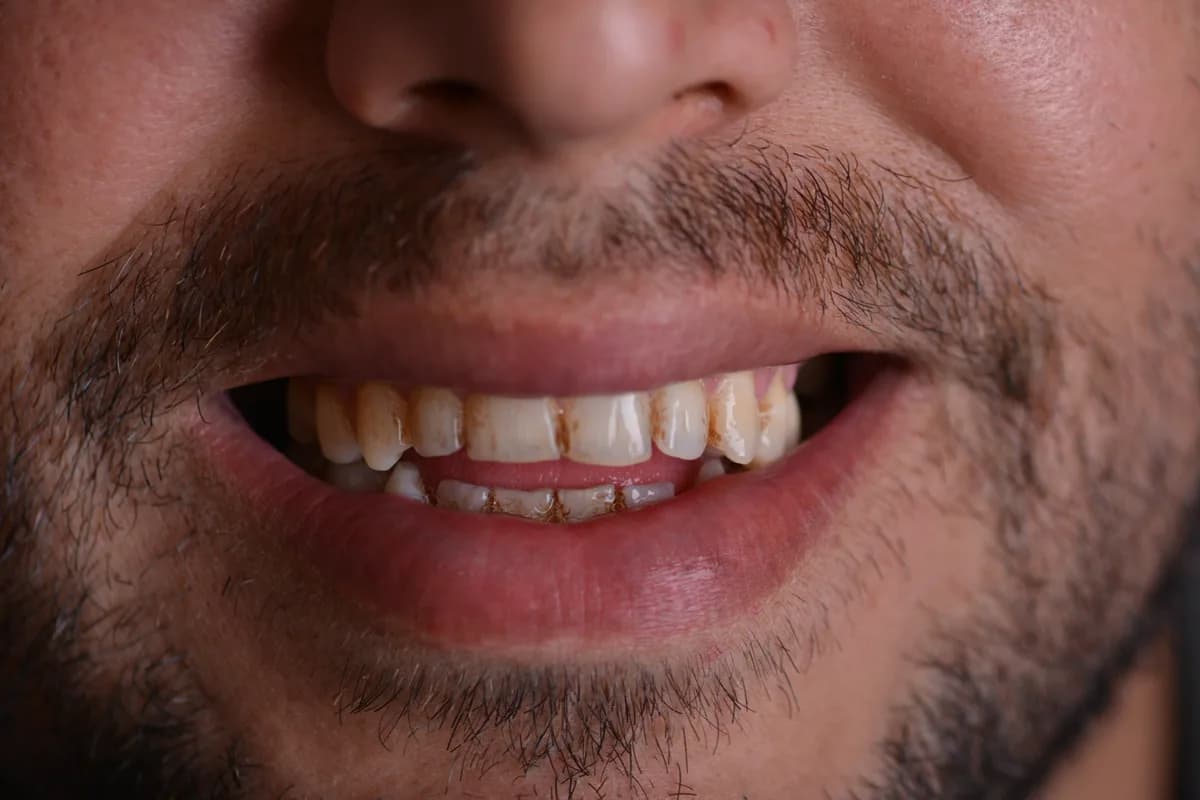 Before
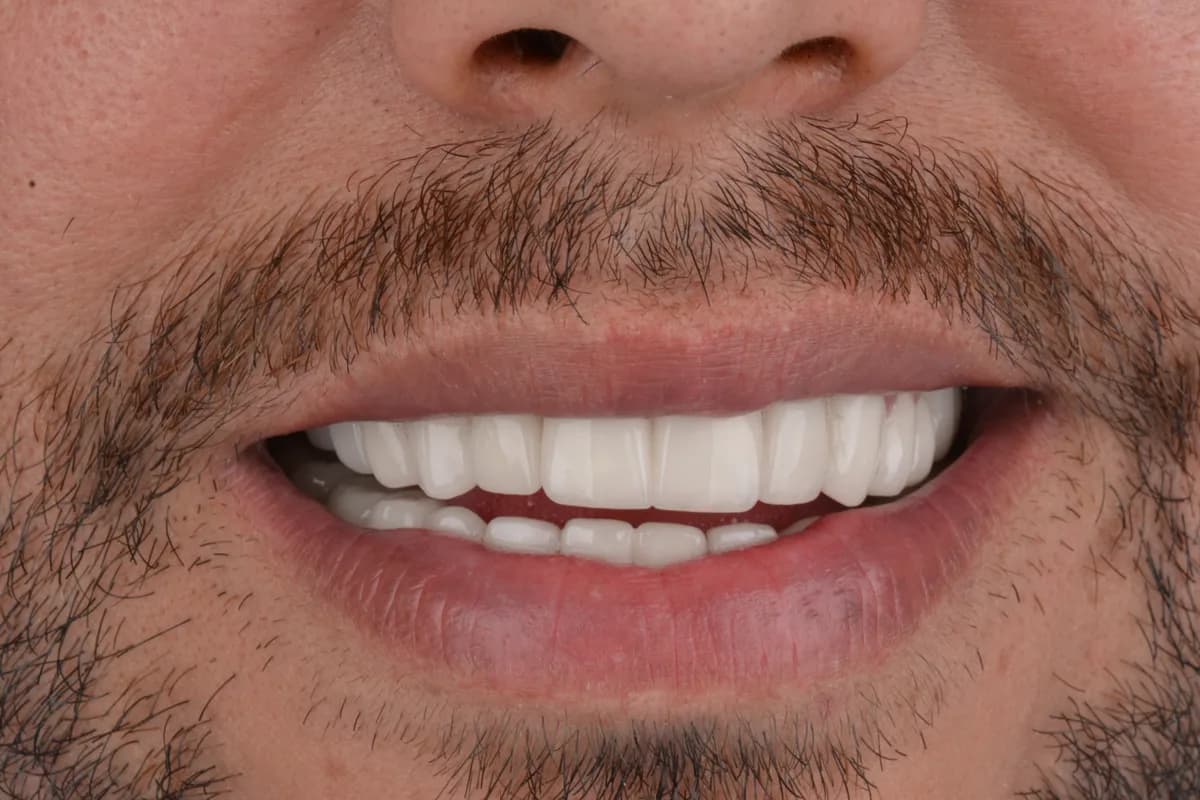 After
After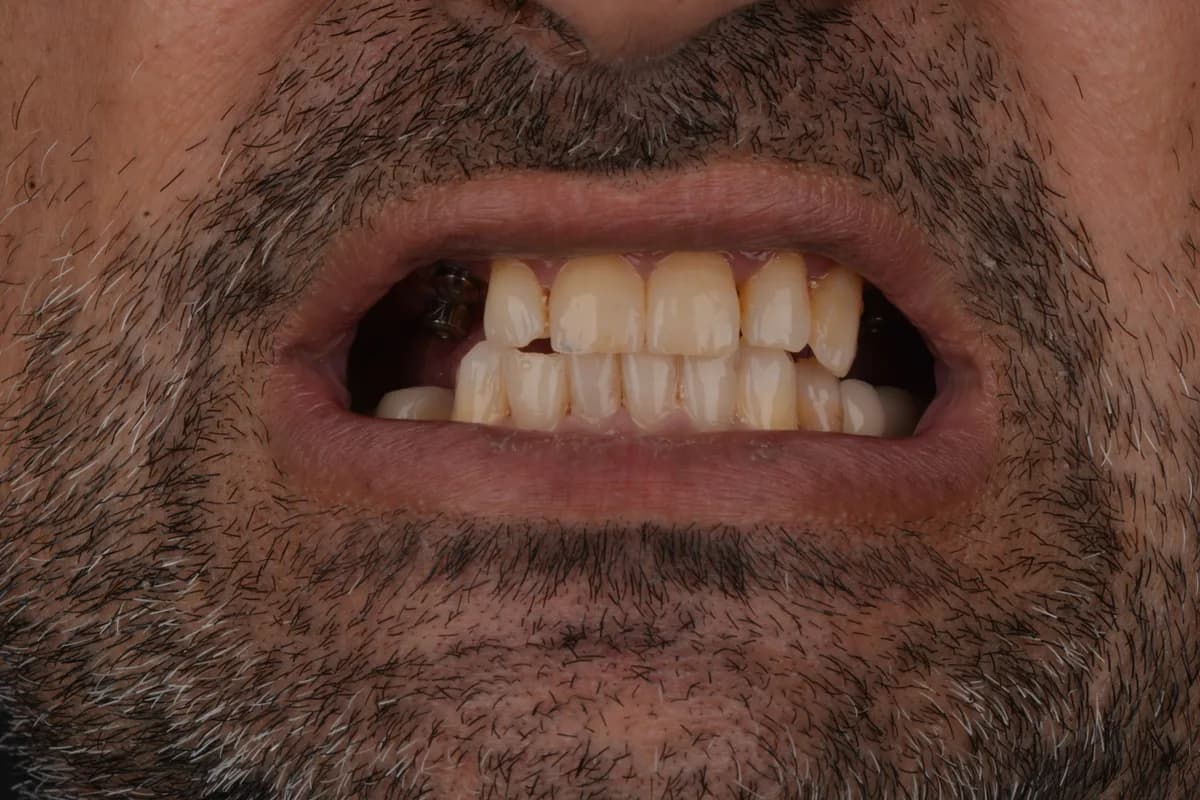 Before
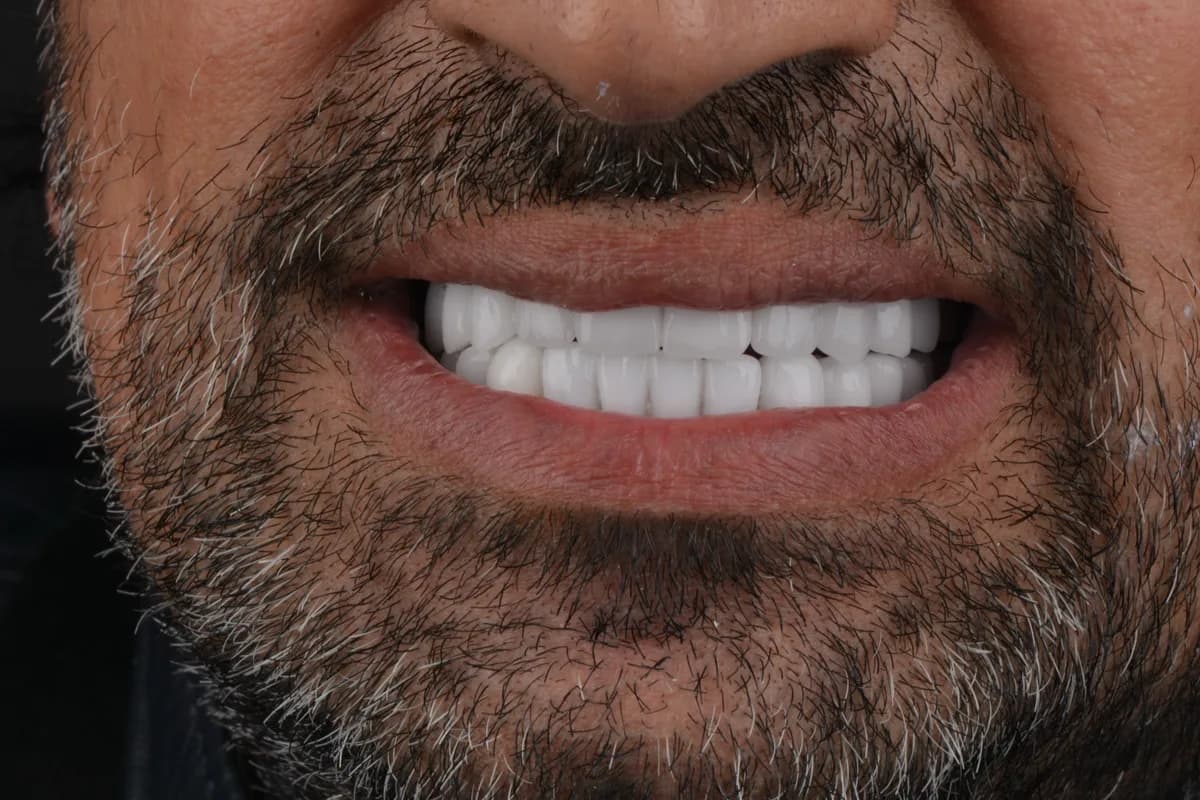 After
AfterLet us be open
Risks and points to consider
Every medical procedure carries risks. The points below are the main known issues for this procedure; a risk assessment specific to you is made during the consultation.
- Because many teeth are prepared at the same time, temporary sensitivity may be more widespread; individual teeth may need root canal treatment.
- Slight changes in gum levels as they heal after gum contouring; the crown margin is adjusted accordingly.
- Fracture or debonding of crowns and veneers; seen especially in those who clench and do not use a night guard.
- A gap between expectation and result; the design approved at the mock-up stage can be changed only to a limited extent after bonding.
- Gum recession with age; the crown margin may become visible over the years.