
About the procedure
Laminate veneers are porcelain shells 0.3–0.7 mm thick, bonded only to the front surface of the tooth. Very little tooth structure is removed, which makes them the most conservative aesthetic option for healthy teeth.
They are used for gapped, mildly crooked, stained or short teeth. The result is previewed in the mouth during the digital design and try-in stage.
Veneer planning starts with evaluating the enamel thickness of the tooth and the bite relationship between the upper and lower teeth; because bonding strength is highest on enamel, reduction is kept within the enamel layer. In bites where the teeth meet edge to edge or the lower teeth protrude forward, a different option may be recommended instead of veneers. The target shade and form are tried in the mouth using a temporary mock-up prepared from facial photographs.
- ✓Minimal tooth preparation
- ✓Natural light transmission
- ✓In-mouth try-in preview
Suitability
Who is it suitable for?
May be suitable
- ✓Those with sound, decay-free teeth with few fillings who want only shade, spacing, or minor shape corrections.
- ✓Patients with small chips, wear, or shortness of the front teeth.
- ✓Those with tetracycline or fluorosis stains that do not respond to whitening.
- ✓Patients with mild crowding and healthy gums who do not want orthodontic treatment.
Should be postponed or is not suitable
- —Large fillings, root canal treatment, or advanced loss of tooth structure in the front teeth; crowns are more suitable for these teeth.
- —Uncontrolled bruxism and habits such as nail biting or chewing on pens.
- —Bite relationships where the teeth meet edge to edge or in a reverse bite; an orthodontic evaluation is needed first.
- —Active gum disease or inadequate oral hygiene.
The final decision on suitability is made after a physician examination and tests.
Process
How does it proceed, step by step?
- 01
Assessment
Enamel thickness, bite, and gum level are examined; problems that can and cannot be solved with veneers are separated.
- 02
Design and mock-up
Temporary material prepared from the digital design is applied to the teeth; length, form, and harmony with the lips are evaluated in the mirror and in photographs.
- 03
Minimal preparation
Guided by the approved design, a thin layer is reduced from the front surface of the tooth as needed; a digital impression is taken and temporary veneers are fitted.
- 04
Try-in
The porcelain veneers are placed on the teeth with try-in gel; shade and margin fit are checked together with the patient.
- 05
Bonding
The tooth surface and porcelain are prepared and bonded with an adhesive system; excess is cleaned away and the bite is checked.
- 06
Check and follow-up
Margins and gums are checked one day later; after you return home, remote follow-up continues through photographs.
Recovery
Recovery timeline
Day 1
Mild gum tenderness is possible after bonding; avoiding very hot and very cold foods helps.
Days 2–3
Adjustment period to the new thickness of the teeth; some sounds may feel different when speaking for a few days.
Week 1
Sensitivity subsides in most patients; normal brushing and flossing resume.
Month 1
The gum margins adapt to the veneers; shade and gloss reach their final form.
Month 6
Check-up and professional cleaning; any stain buildup along the bonding margins is polished.
Year 1
At the annual check-up, margin integrity and the need for a night guard are evaluated.
Timeframes are averages; they vary by person and by the scope of the procedure.
Results
Before / After
Published with patient consent. Results vary from person to person.
 Before
 After
After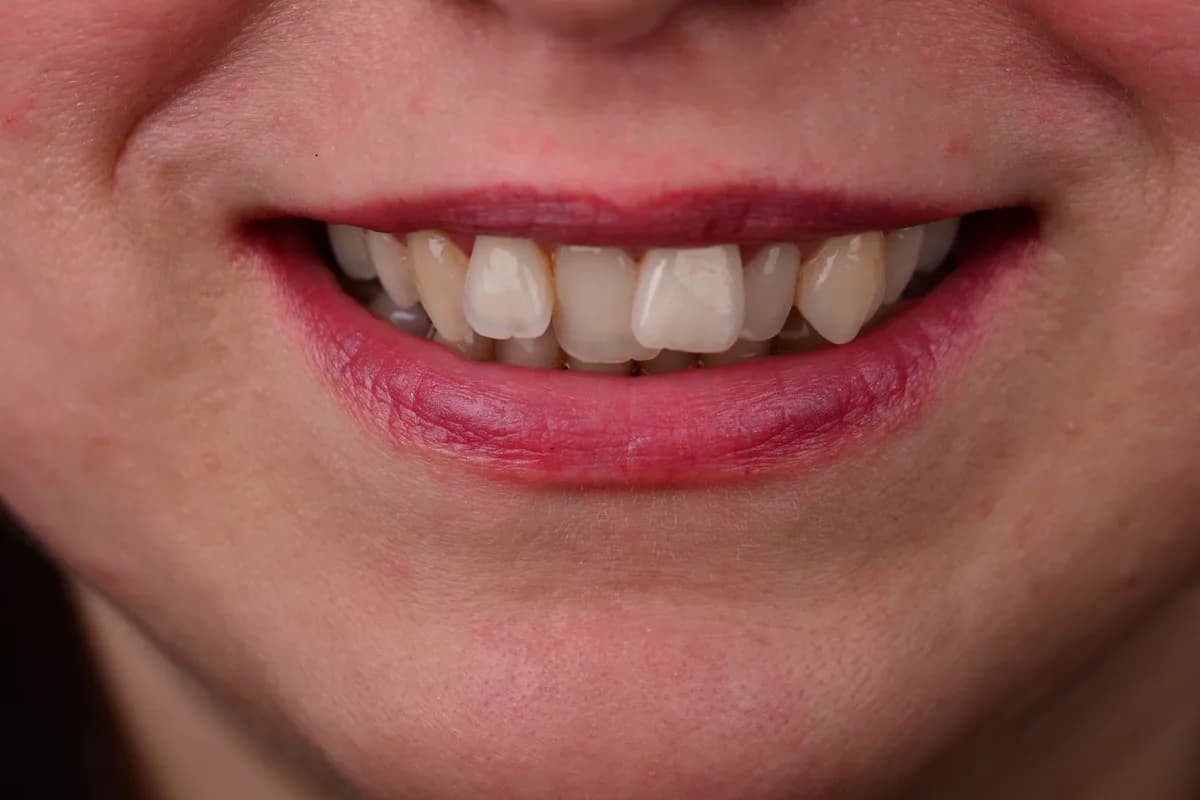 Before
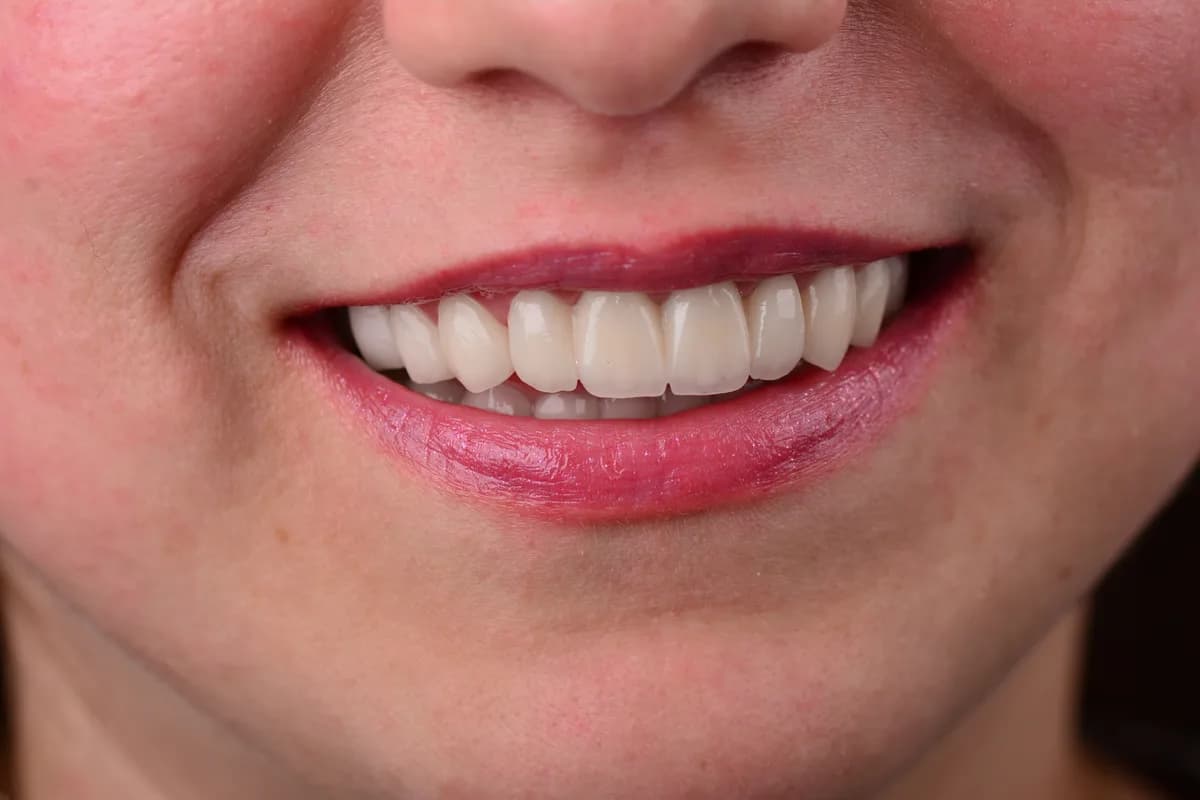 After
AfterLet us be open
Risks and points to consider
Every medical procedure carries risks. The points below are the main known issues for this procedure; a risk assessment specific to you is made during the consultation.
- Temporary hot and cold sensitivity after reduction; it may be more pronounced in preparations close to the dentin.
- Fracture of a veneer or separation from the bonding surface (debonding) from hard biting or clenching; rebonding or replacement is needed.
- Discoloration along the bonding margin over time; it is accelerated by smoking, coffee, and tea.
- Veneers are an irreversible procedure; because the reduced enamel does not grow back, they must be replaced when their lifespan ends.
- In case of gum recession, the transition between the veneer margin and the tooth may become visible.