
About the procedure
In breast augmentation, the volume and shape of the implant are chosen by measuring chest width, existing breast tissue and the patient's expectations. The implant is placed under the muscle, over the muscle or with the dual plane technique.
The incision is usually made in the fold under the breast and disappears into the crease once healed. For patients who want a modest increase in volume, fat transfer is an alternative.
At the initial consultation, chest width, breast base diameter, skin elasticity, and existing differences between the two breasts are measured; the implant volume is chosen from the range these measurements allow. Sizers are tried on inside a bra, so that expectations and anatomical limits are discussed at the same table. Round or anatomical (teardrop) shape, surface type, and placement plane are decided together based on tissue thickness, exercise habits, and future pregnancy plans.
- ✓Measurement-based implant selection
- ✓Hidden incision in the breast fold
- ✓Implants with a lifetime manufacturer warranty
Suitability
Who is it suitable for?
May be suitable
- ✓Adult women whose breast development is complete and who find their breast volume small in proportion to their body.
- ✓Those who have lost fullness in the upper pole of the breast after pregnancy, breastfeeding, or weight loss.
- ✓Those with a marked volume difference between the two breasts (asymmetry).
- ✓Patients whose nipple sits above the fold level, meaning there is no significant sagging.
- ✓People whose weight has been stable for at least six months and whose expectation is limited to a measurable increase in volume.
Should be postponed or is not suitable
- —Surgery is postponed in women who plan a pregnancy soon or have not yet finished breastfeeding.
- —In pronounced sagging where the nipple has dropped below the fold, an implant alone is not enough; a lift is considered together with it.
- —Active breast disease, an unexplained breast lump, or an unscreened family history of breast cancer is clarified first with the relevant department.
- —Planning is put on hold for uncontrolled diabetes, clotting disorders, and ongoing smoking, since these impair wound healing.
The final decision on suitability is made after a physician examination and tests.
Process
How does it proceed, step by step?
- 01
Initial consultation
A first remote assessment is made from photographs and measurements; expectations, pregnancy plans, and previous breast examinations are discussed.
- 02
Tests and planning
In Istanbul, an examination, blood tests, and a breast ultrasound if needed are done. Implant size, shape, and placement plane are finalized with a sizer trial.
- 03
Procedure day
Under general anesthesia, the incision is made, the implant pocket is prepared, and the implant is placed. You stay one night in the hospital.
- 04
First check-up
The next day the dressing is checked, any drain is removed, and you are discharged wearing a sports bra.
- 05
Pre-departure check-up
The incision line and implant position are assessed; whether massage is needed, limits on arm movement, and medication use are explained.
- 06
Remote follow-up
After returning to your country, you are followed with photographs at set intervals; you are reminded about an annual breast check and ultrasound.
Recovery
Recovery timeline
Day 1
Tightness and a feeling of pressure in the chest are normal and managed with pain relievers. The arms are not raised above shoulder level.
Days 3–5
Swelling is at its peak, and the breasts look higher and firmer than normal. Short walks begin, and showering is usually cleared during this period.
Week 1
You can return to desk work. The sports bra is worn day and night; driving resumes once pain relievers are no longer needed.
Month 1
A significant part of the swelling subsides and the implants begin to settle. Light cardio is allowed; movements that work the chest muscles are avoided.
Month 3
The implant softens and takes its natural position; you can switch to an underwire bra. Weight training begins gradually.
Year 1
The incision scar fades and nearly disappears into the fold. From this point on, annual ultrasound follow-up becomes routine.
Timeframes are averages; they vary by person and by the scope of the procedure.
Results
Before / After
Published with patient consent. Results vary from person to person.
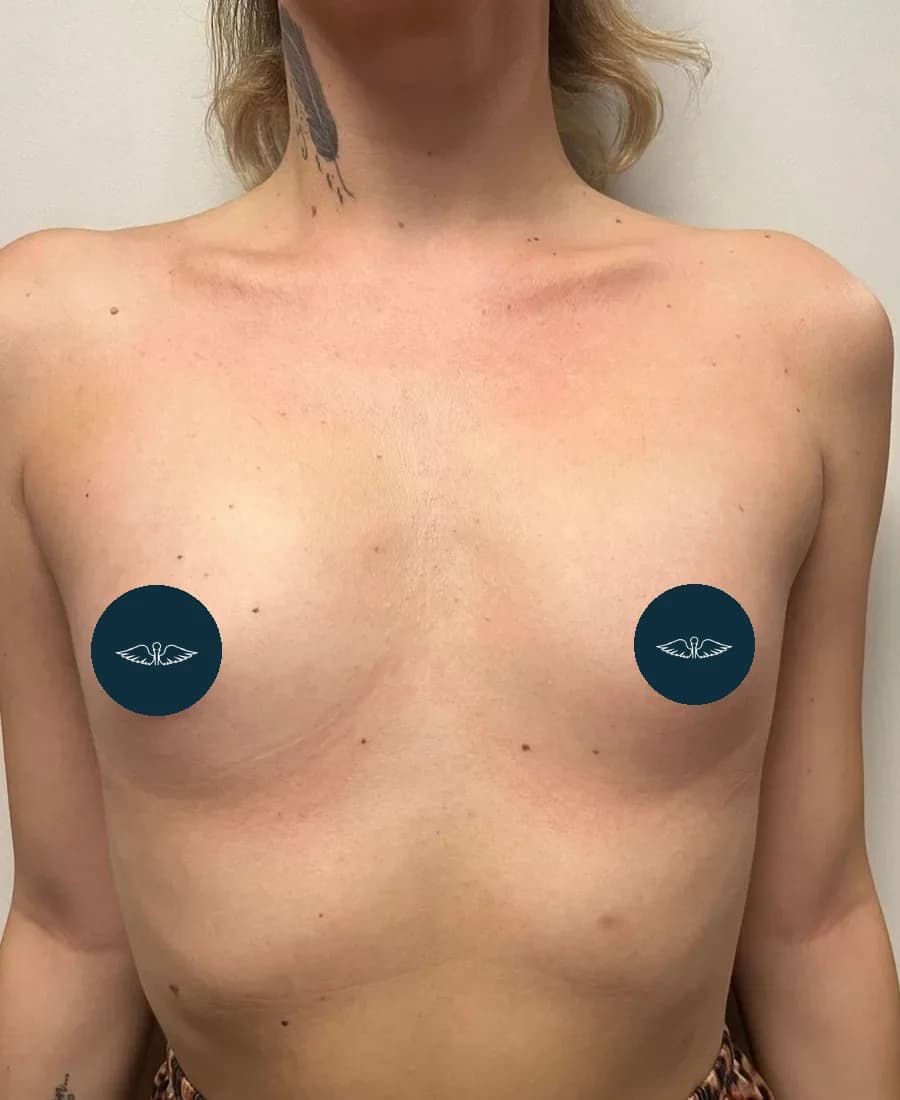 Before
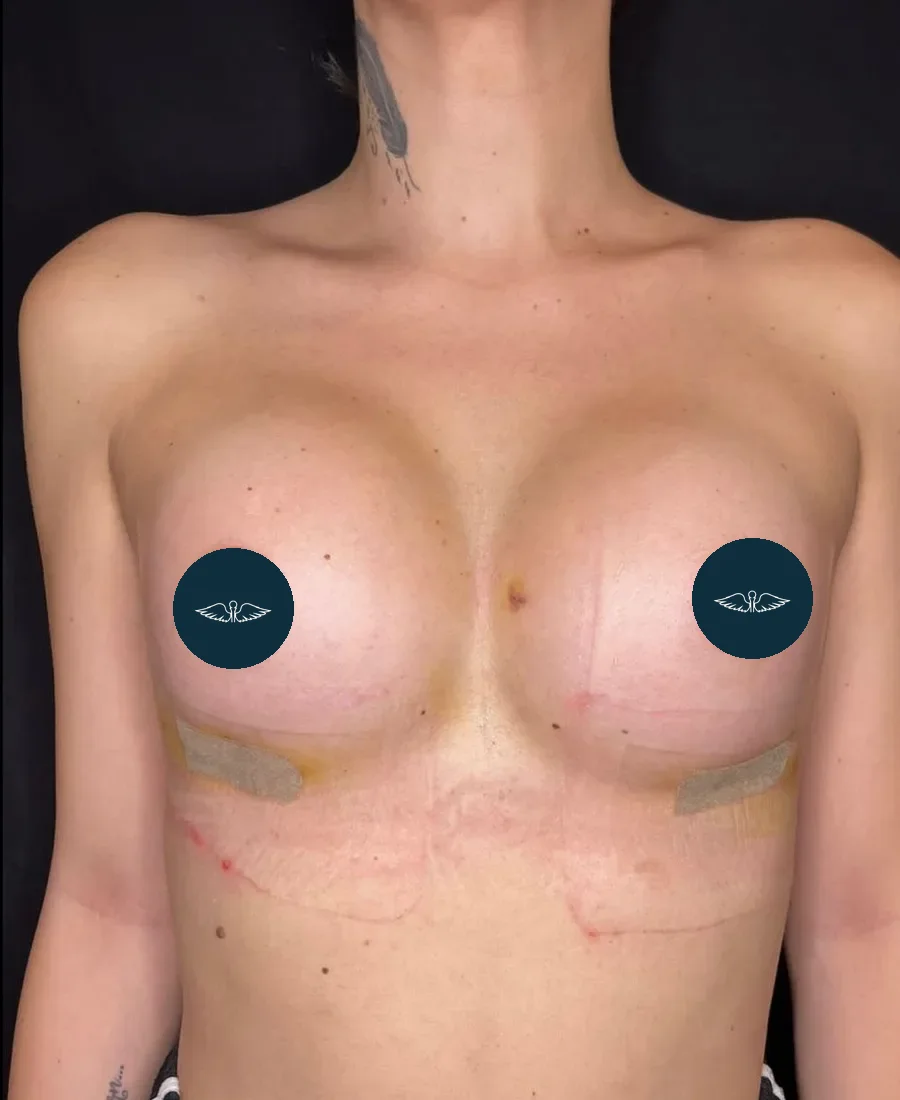 After
After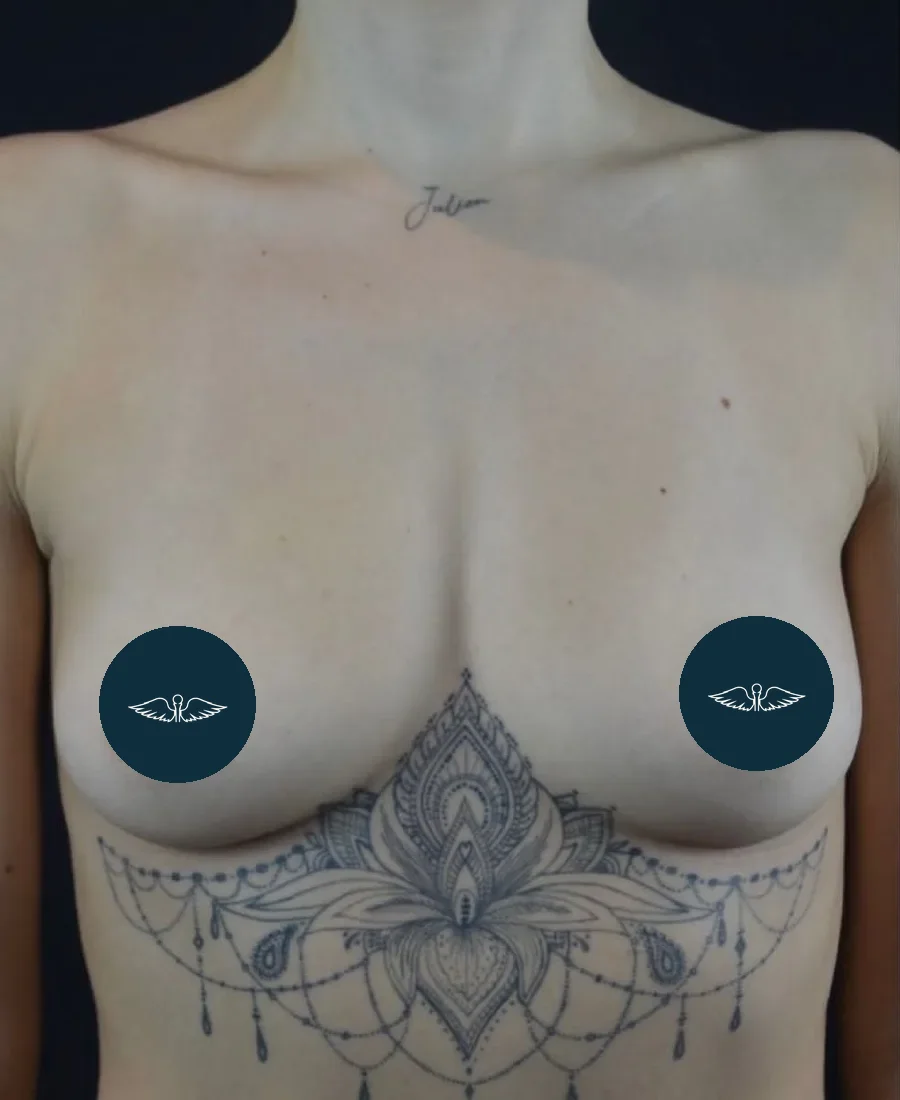 Before
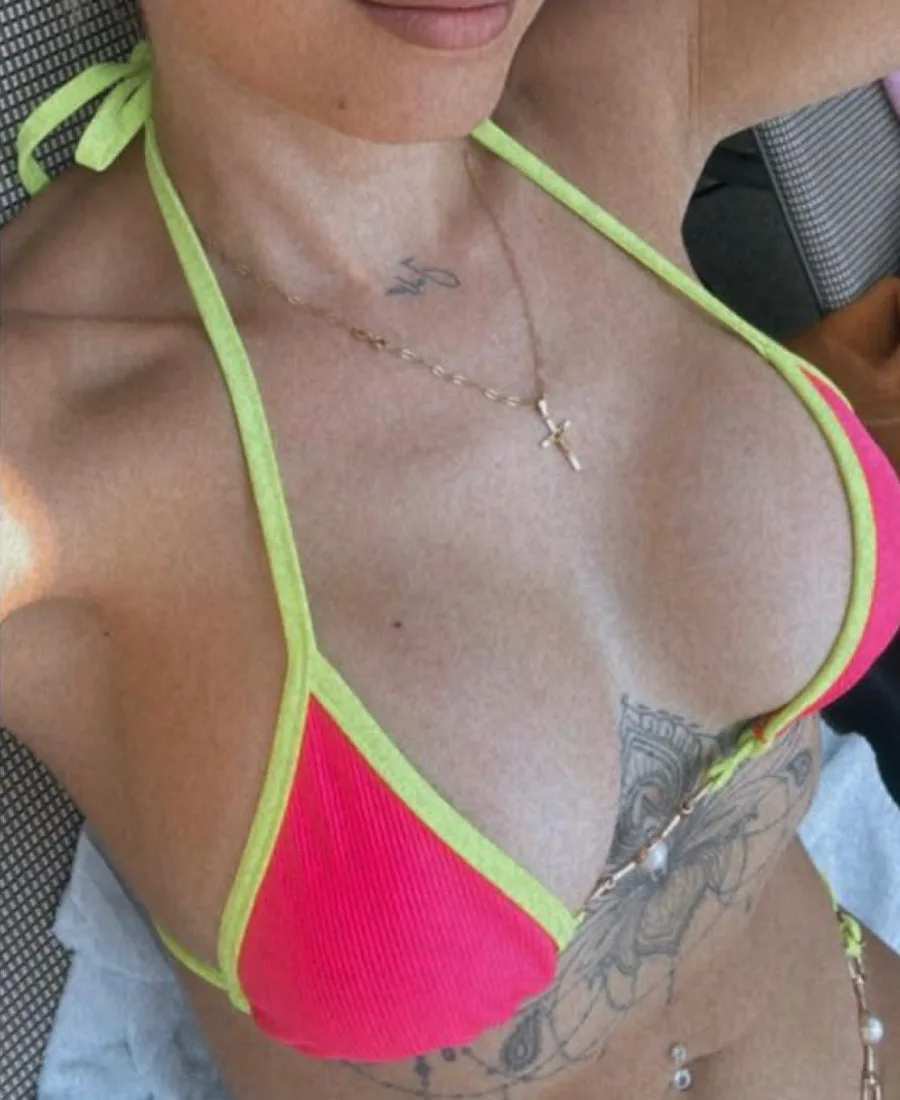 After
AfterLet us be open
Risks and points to consider
Every medical procedure carries risks. The points below are the main known issues for this procedure; a risk assessment specific to you is made during the consultation.
- Capsular contracture: the natural membrane around the implant can harden over time and make the breast feel firm and misshapen; in advanced cases a revision is needed.
- Temporary or, rarely, permanent reduction or increase in nipple sensation.
- Implant displacement, rotation (with anatomical shapes), or the edges being felt through thin skin (rippling) are possible.
- Blood accumulation (hematoma) and infection; although rare, these may require removal of the implant.
- Implants are not considered lifelong; there is a possibility of a second surgery in the future due to rupture, contracture, or a change in expectations.