About the procedure
Rhinoplasty brings the shape of the nose into proportion with the rest of the face while protecting or improving the airway. At TurkeySurgery Group, nose surgery is planned by Dr. Sefa, an ear, nose and throat specialist who evaluates both aesthetic and functional aspects.
During the pre-operative consultation, the nasal bone and cartilage structure, skin thickness, septal deviation and breathing complaints are assessed together. Closed, open or ultrasonic (piezo) technique is chosen according to the patient's anatomy.
The surgical plan is made after an internal nasal exam and, when needed, a CT scan to assess the airway; for the external appearance, goals are discussed with the patient over photographs. When a piezo (ultrasonic) device is chosen for bone shaping, the surrounding tissue is exposed to less trauma; the choice of method, however, depends on the bone structure and the planned change. In patients with breathing complaints, septoplasty and turbinate work are included in the same session.
- ✓Aesthetic and functional evaluation by the same surgeon
- ✓Splint removal and first check-up done while you are in Istanbul
- ✓A face-specific design that respects ethnic features
Suitability
Who is it suitable for?
May be suitable
- ✓People bothered by a hump on the nasal bridge, a wide tip, or a nose that looks large for the face, whose bone growth is complete (generally 17–18 years and older).
- ✓Those who, alongside aesthetic goals, have difficulty breathing due to a deviated septum, enlarged turbinates, or valve narrowing.
- ✓Those who have developed a crooked or collapsed nose after a previous injury.
- ✓Patients with realistic expectations who accept that the result will be a natural nose that suits their own face.
Should be postponed or is not suitable
- —Adolescents whose nasal bone growth is not yet complete; unless there is a functional necessity, surgery is postponed.
- —Patients with an uncontrolled bleeding disorder, an active infection inside the nose, or regular cocaine use.
- —People who perceive a minor difference in their appearance as a major problem and repeatedly seek surgery; a psychiatric evaluation is recommended first in these cases.
- —Those who have had nasal surgery within the past year; for a revision, the tissue is allowed to soften first.
The final decision on suitability is made after a physician examination and tests.
Process
How does it proceed, step by step?
- 01
Initial consultation
An online assessment is made from photographs and breathing complaints; the suitability of the closed, open, or piezo technique is discussed.
- 02
Examination and tests
On arrival in Istanbul, an endoscopic nasal exam, blood tests, and an anesthesia assessment are completed; the target appearance is clarified with the patient.
- 03
Surgery
Under general anesthesia, bone and cartilage are reshaped; the septum is corrected if needed. A thermoplastic splint is placed on the outside of the nose and soft silicone packing inside.
- 04
Overnight in the hospital
You stay under observation for one night; the head is kept elevated and cold compresses limit bruising.
- 05
Splint removal
Six to seven days after surgery the splint and packing are removed and sutures are taken out; the nose is taped and fitness to fly is checked.
- 06
Remote follow-up
Photo check-ups are done at months 1, 3, 6, and 12; massage and taping advice for tip swelling is given remotely.
Recovery
Recovery timeline
Day 1
The nose feels blocked, and bruising and swelling begin around the eyes; pain is usually controlled with oral pain relievers.
Days 3–5
Bruising peaks and starts to fade; mouth breathing gradually gives way to partial nasal breathing.
Week 1
The splint is removed; the nose looks swollen and turned up, which is temporary. You can fly home, but glasses are postponed.
Month 1
Most of the swelling subsides and is no longer noticeable in social settings; a gradual return to sports beyond light walking begins.
Month 3
The bridge has largely settled; in patients with thick skin the tip may still be slightly swollen. Contact sports can resume.
Year 1
The tip and skin settle completely; the final shape is judged at this stage, and this period is allowed to pass before any revision decision.
Timeframes are averages; they vary by person and by the scope of the procedure.
Results
Before / After
Published with patient consent. Results vary from person to person.
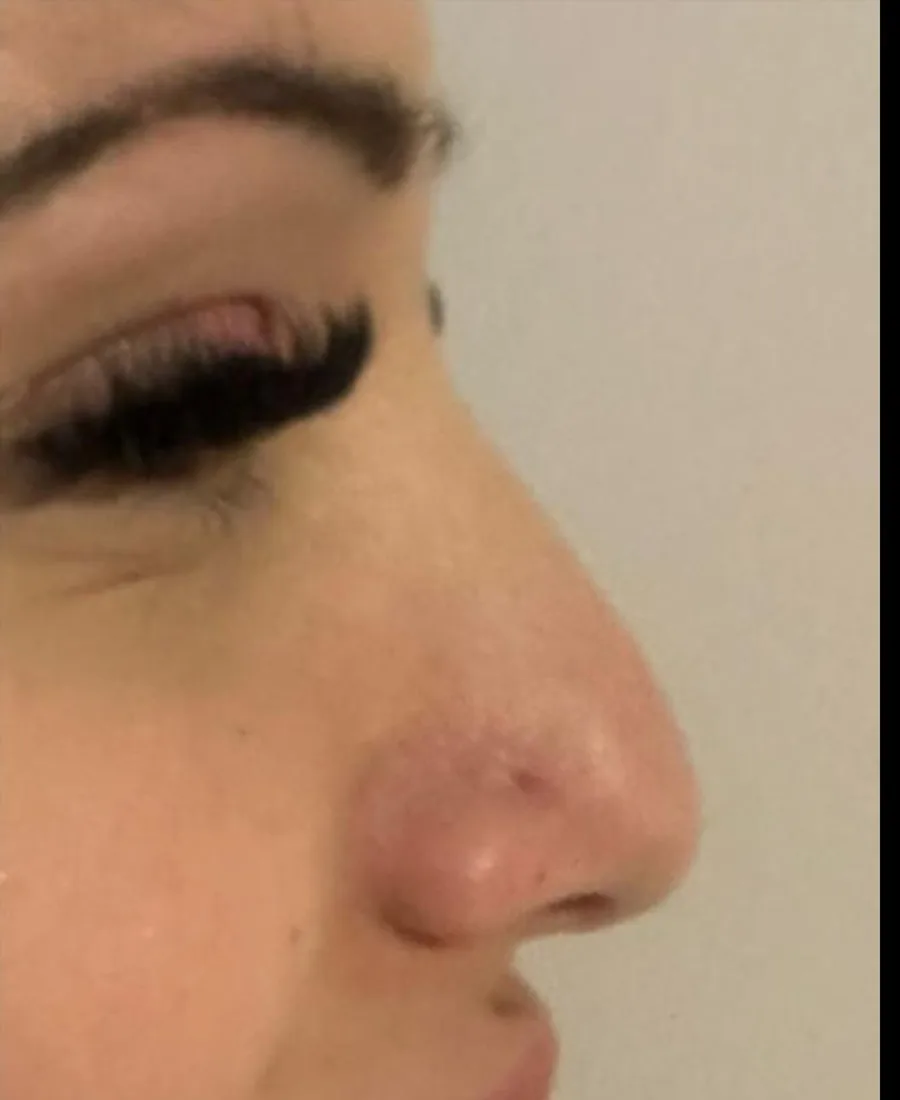 Before
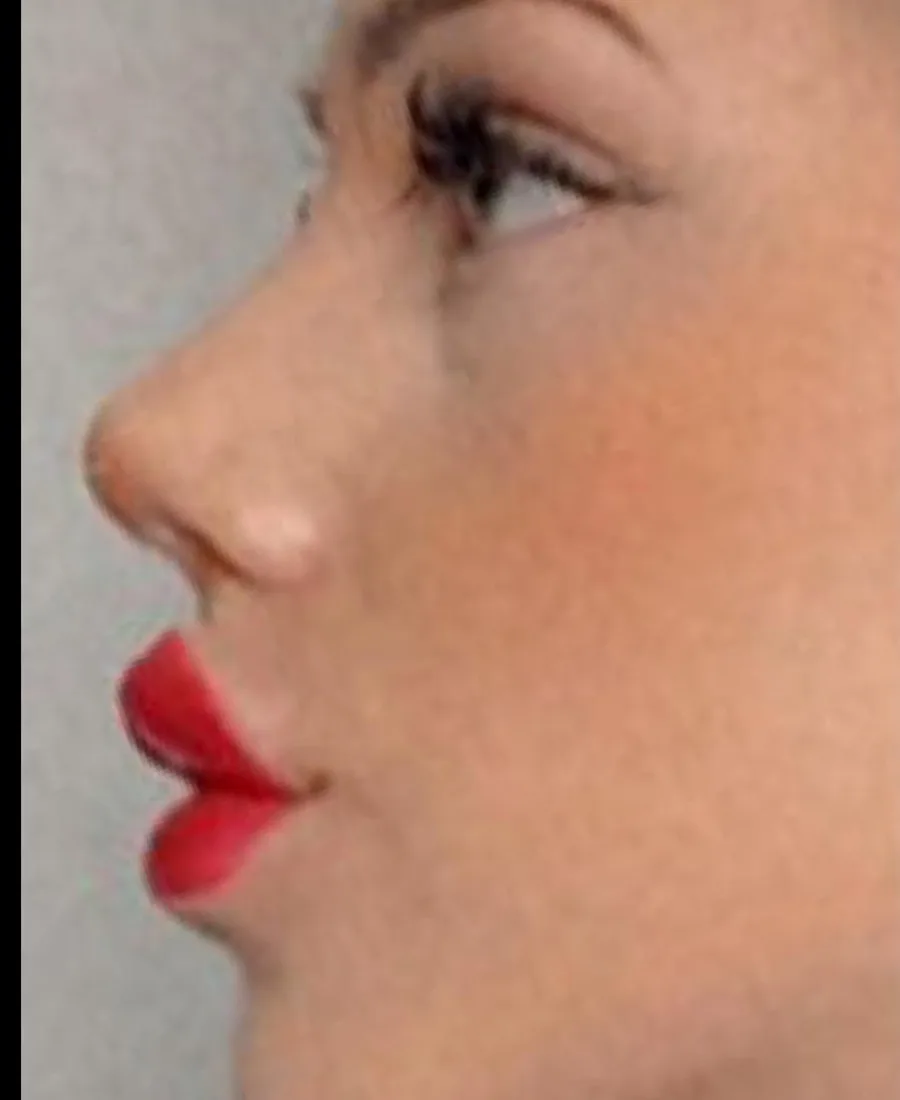 After
AfterLet us be open
Risks and points to consider
Every medical procedure carries risks. The points below are the main known issues for this procedure; a risk assessment specific to you is made during the consultation.
- Oozing-type bleeding in the first days after surgery is normal; rarely, bleeding that requires packing can develop.
- Slight asymmetry or small irregularities on the bridge that appear as swelling subsides; some settle over time, some may need a minor revision.
- Temporary numbness at the tip and a reduced sense of smell for a few weeks.
- Narrowing of the airway or a hole in the septum (perforation) are rare complications, but they have functional consequences.
- Thick skin, previous surgery, and smoking prolong healing; in rhinoplasty generally, the possibility of a revision is discussed with the patient in advance.