
About the procedure
A double chin can develop genetically, independent of weight. Fat is removed through 2–3 mm entry points under the chin; if the skin is of good quality it retracts, revealing a sharp chin-neck angle.
In mild cases, a similar result can be achieved without surgery using Endolift; with pronounced skin laxity, a neck lift is needed.
At the examination, the cause of the double chin is identified: subcutaneous fat, laxity of the muscles under the chin (platysma), or a recessed chin structure? Only subcutaneous fat accumulation improves with liposuction; muscle laxity calls for a neck lift, and a recessed chin for chin augmentation. Because the procedure is done under local anesthesia, the patient can communicate throughout; the work is done in the superficial layer, protecting the nerve pathway beneath the chin.
- ✓Same-day discharge under local anesthesia
- ✓Invisible entry points
- ✓Can be combined with Endolift
Suitability
Who is it suitable for?
May be suitable
- ✓People with elastic skin and fat accumulation under the chin related to weight or genetics.
- ✓Patients, generally in a younger age group, without significant sagging of the neck skin.
- ✓Those who want a procedure short of surgery with a brief stay.
Should be postponed or is not suitable
- —Those with marked sagging of the neck skin or muscle bands; sagging can worsen when fat is removed, and a neck lift is needed.
- —Those whose double chin results from a recessed chin; chin augmentation is considered.
- —Those with a bleeding disorder, an active neck infection, or recent surgery in the thyroid area.
The final decision on suitability is made after a physician examination and tests.
Process
How does it proceed, step by step?
- 01
Initial consultation
Fat, skin, and muscle laxity are distinguished; which of liposuction, Endolift, or a neck lift is appropriate is determined.
- 02
Preparation
Blood thinners and supplements are stopped with the physician's approval; smoking is stopped around the time of the procedure.
- 03
Procedure
Under local anesthesia, 2–3 mm entry points are made under the chin and behind the ears; superficial fat is removed with a fine cannula and symmetry is checked.
- 04
Chin strap
A compression strap is fitted as soon as the procedure ends; you go home the same day with a companion.
- 05
Check-up and return
Entry points are assessed; clearance to fly is given on days 3–4 and strap use is taught.
Recovery
Recovery timeline
Day 1
There is swelling, mild bruising, and tightness under the chin; you sleep with the head elevated.
Days 3–5
Bruising may spread down the neck; pain is mild. The strap is worn day and night.
Week 1
You can return to social life; firmness and numbness under the chin are normal.
Month 1
Swelling has largely subsided and the jawline begins to show; exercise is allowed.
Month 3
Firm areas soften; skin retraction is complete and the final contour settles.
Timeframes are averages; they vary by person and by the scope of the procedure.
Results
Before / After
Published with patient consent. Results vary from person to person.
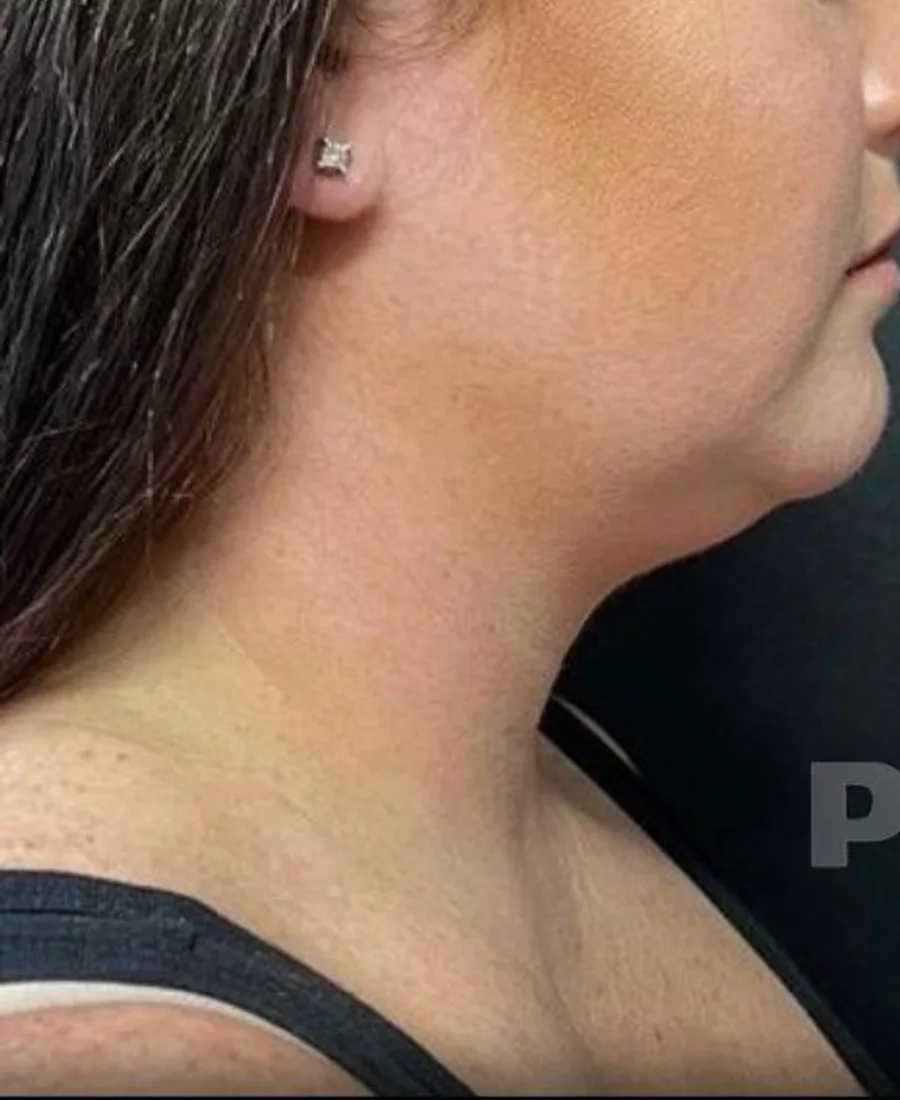 Before
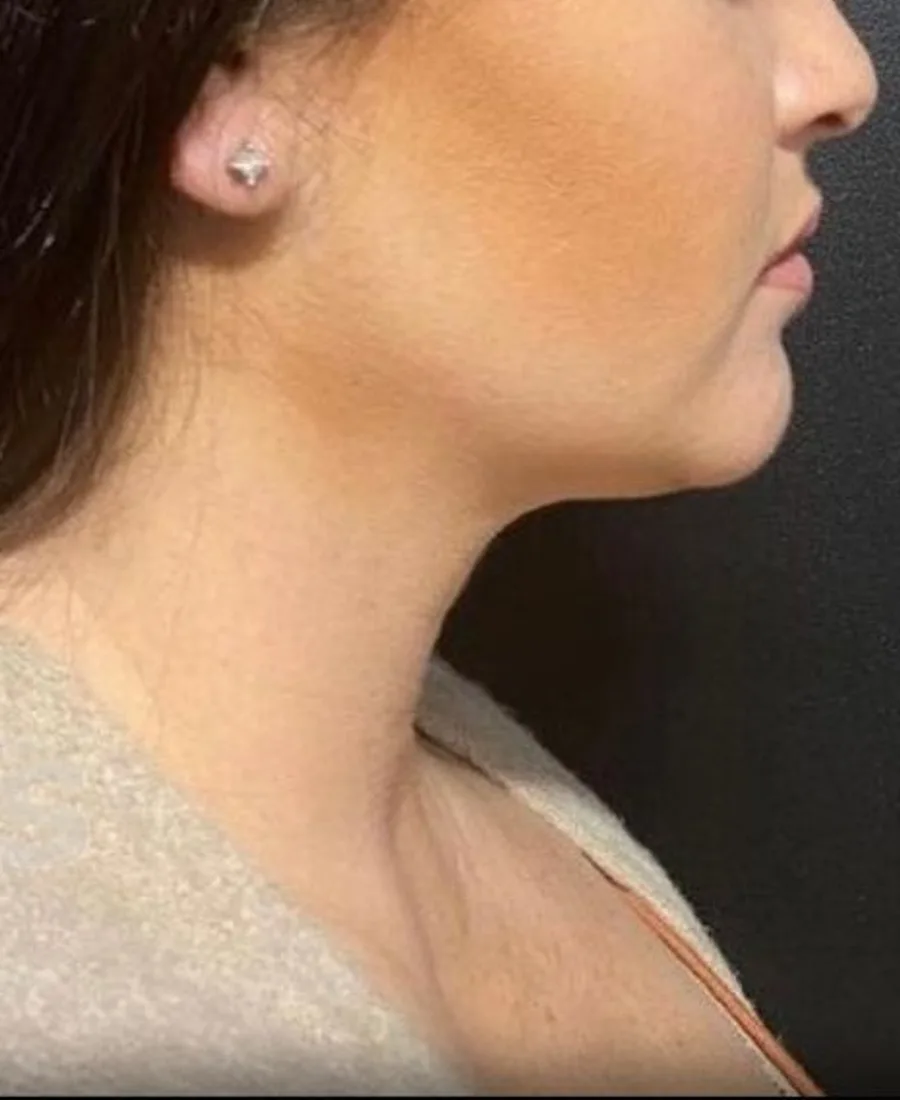 After
After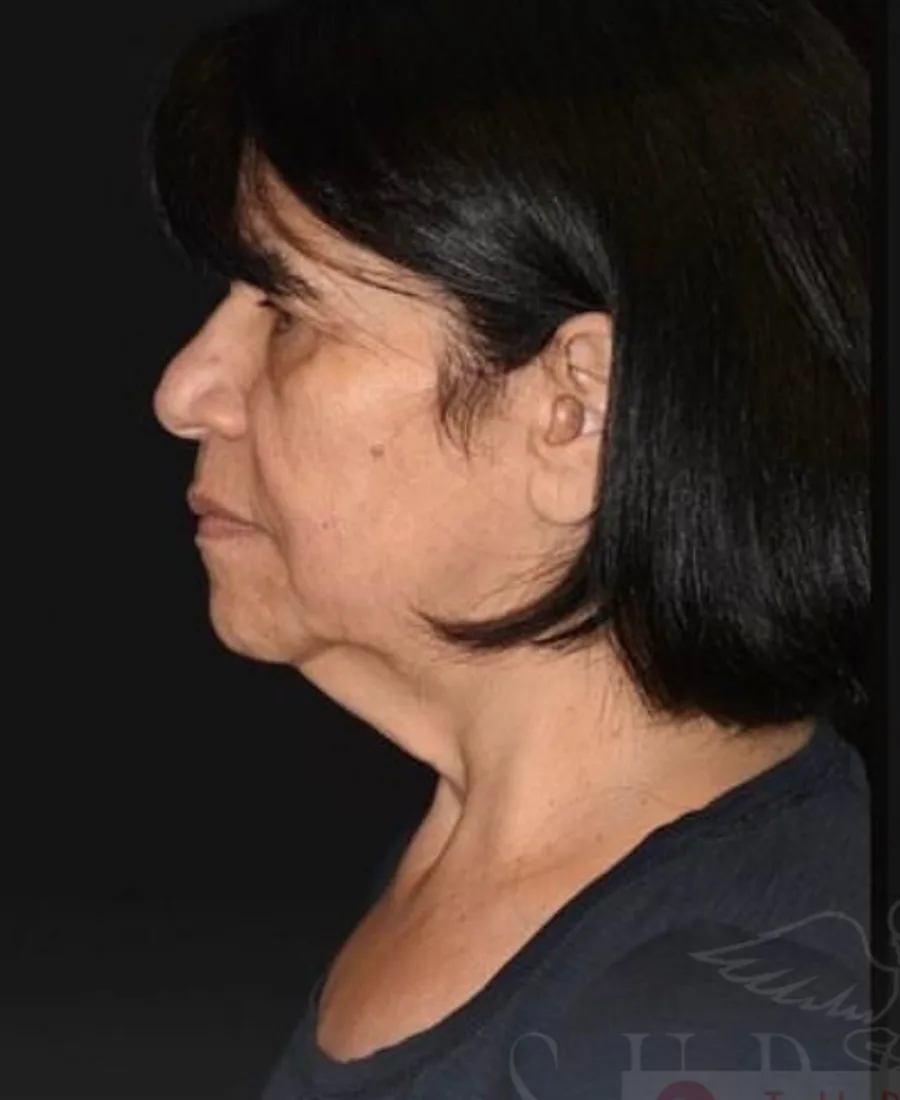 Before
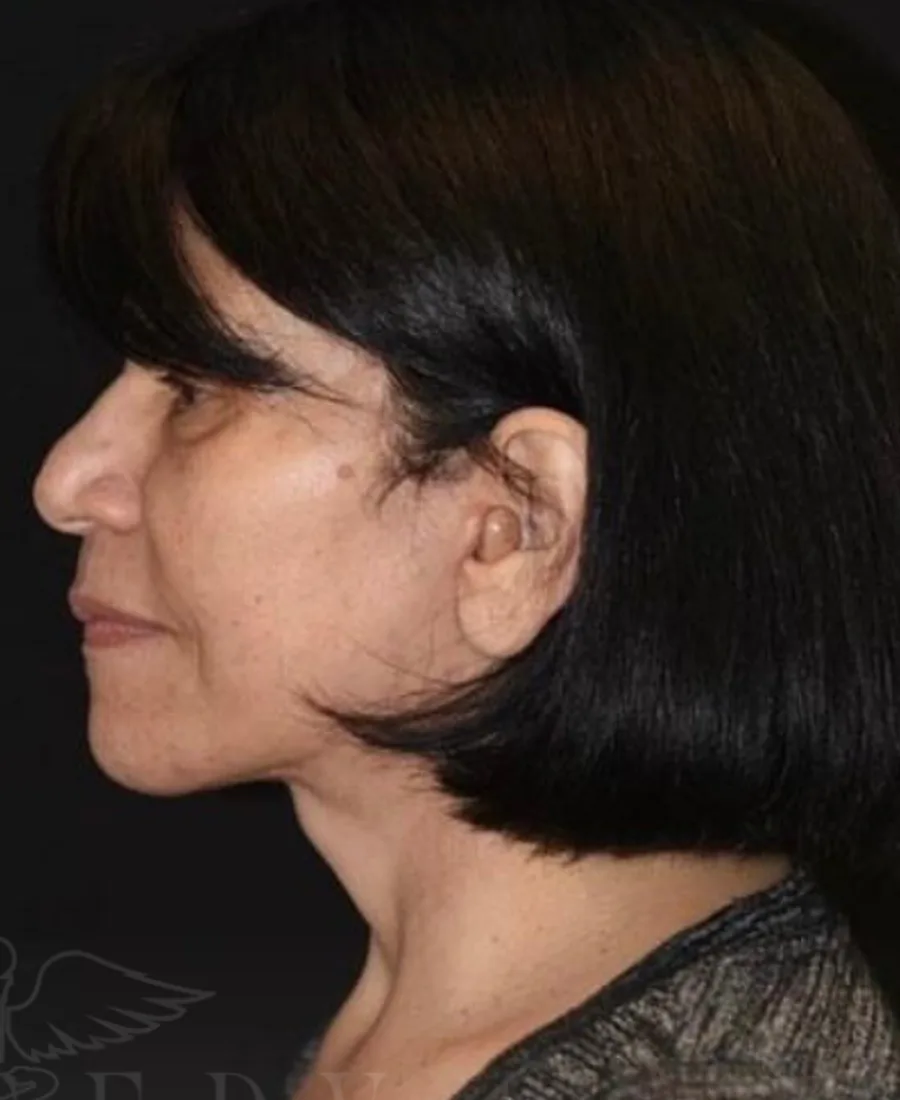 After
After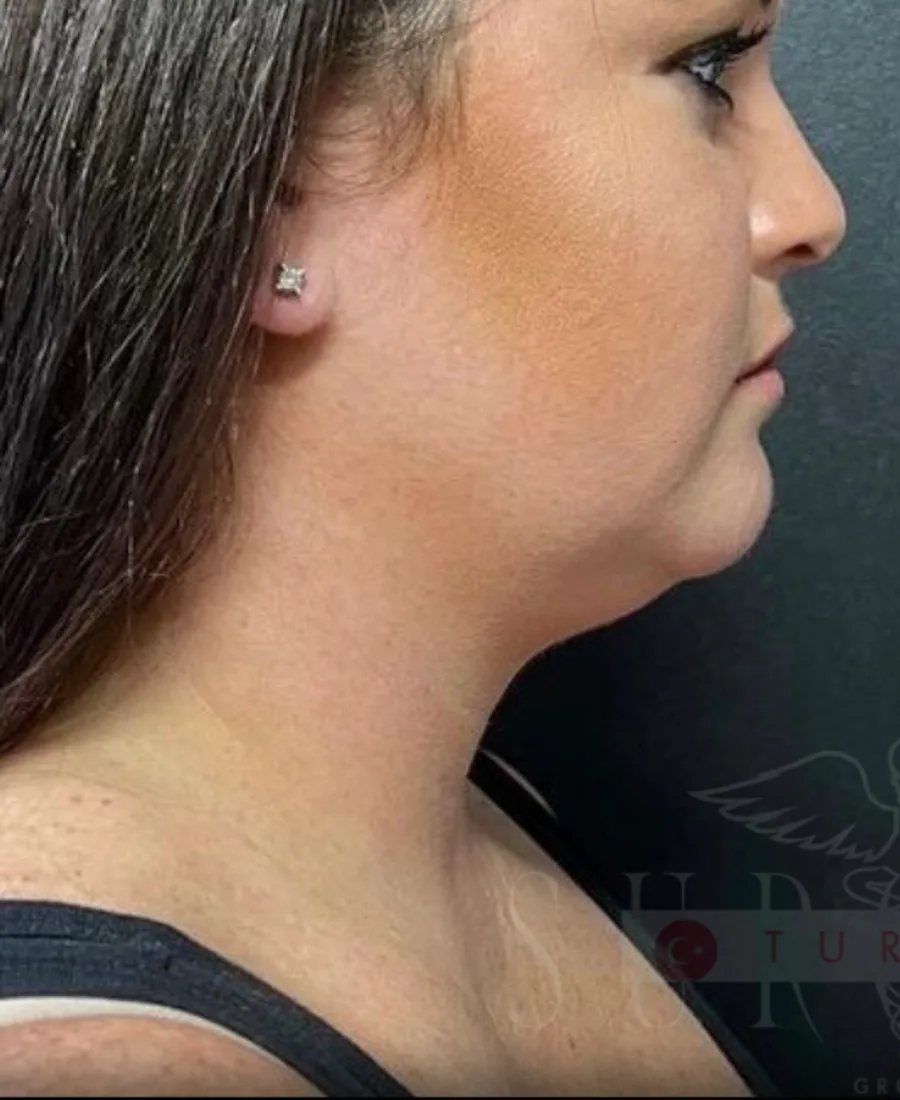 Before
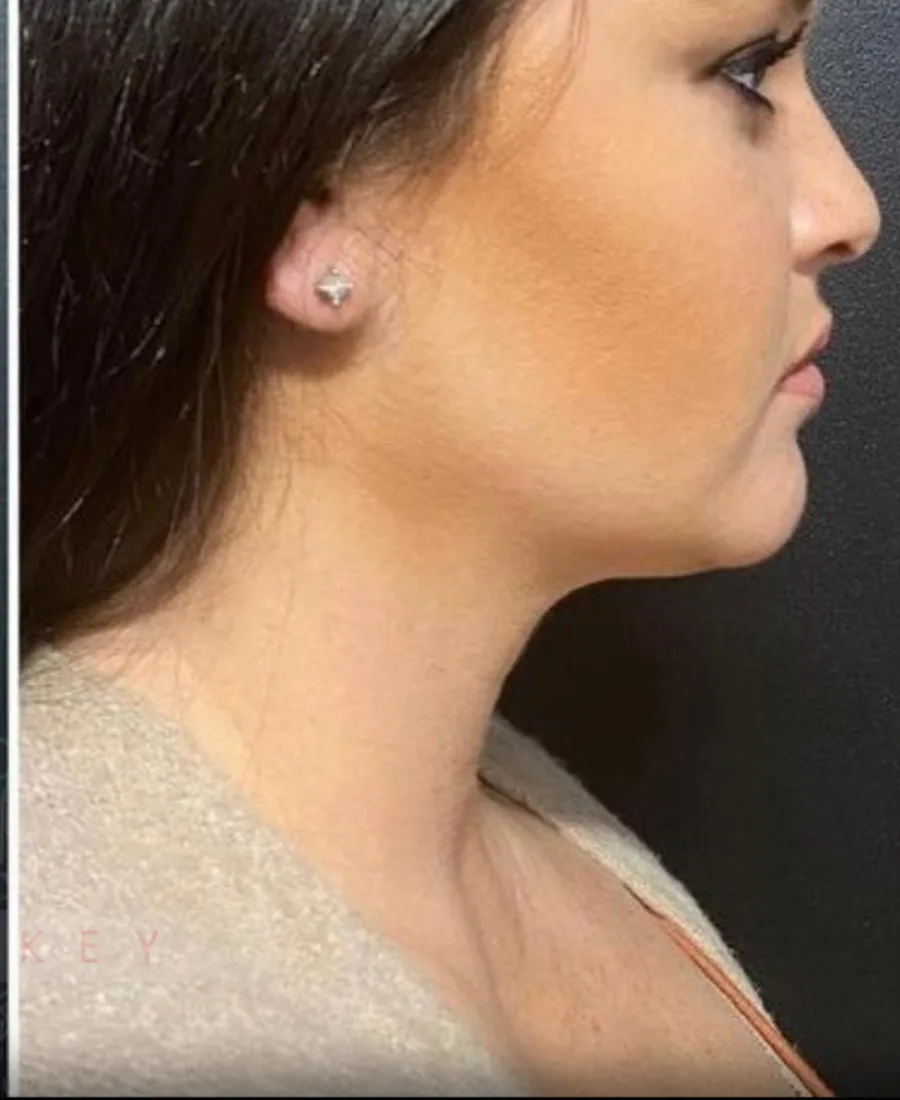 After
AfterLet us be open
Risks and points to consider
Every medical procedure carries risks. The points below are the main known issues for this procedure; a risk assessment specific to you is made during the consultation.
- Contour irregularity or dimpling under the chin; reduced by avoiding excessive fat removal.
- Asymmetry when smiling due to temporary injury to the nerve branch at the edge of the lower lip; it usually resolves within weeks.
- More noticeable skin sagging; seen in patients with inadequate skin elasticity and prevented through selection.
- Seroma, bleeding, infection, and prolonged numbness; these are rare.